Ernste Spiele III: Immersion
Harun Farocki
Ernste Spiele III: Immersion, 2009
Single-channel version of the two-channel video installation, Video, color, sound, 20 min, Director, Scriptwriter: Harun Farocki, Research: Matthias Rajmann, Editors: Harun Farocki, Max Reimann, Cinematographer: Ingo Kratisch, Sound: Matthias Rajmann, Production: Harun Farocki Filmproduction, Berlin, with support from Medienboard Berlin-Brandenburg GmbH, Co-production: Jeu de Paume, Paris, Stuk, Leuven
GF0031147.00.0-2010
Artwork text
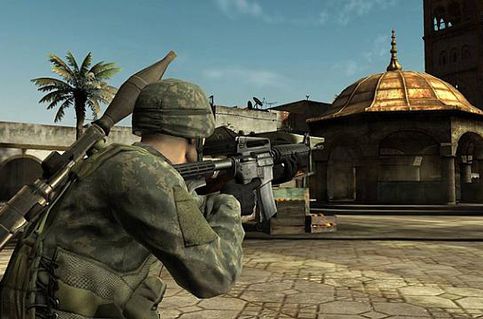
Since the late 1960s, Harun Farocki has been considered one of Germany’s most influential documentary filmmakers and media artists. Farocki was a keen observer and analyst of societal power relationships. He was particularly interested in the principles used by a society to commit structural violence. The themes of his works included the effects of totalitarian surveillance and control systems, living and working worlds steeped in capitalist logic, and the increasingly complex relationship between human and machine. In addition, Farocki repeatedly explored the role of the image in power relationships. His works visualize how images are instrumentalized, whether through surveillance, military use, or TV and advertising. Ernste Spiele (Serious Games, 2009/10) is a four-part film series in which Farocki documented the use of virtual reality, specifically video game technologies, in training and therapy for soldiers. Taking the form of a double-projection montage, the third part, Immersion, analyzes a workshop by therapists for therapists about the Virtual Iraq software program, used in the treatment of trauma. The workshop was held in Fort Lewis in the US state of Washington. The software is used in therapy to help soldiers process traumatic experiences by reliving them in a simulation while under the supervision of a psychologist. During the workshop, civilian therapists from a private company seeking to sell the program to the army simulate a fictional ambush and the emotional crisis of a traumatized soldier. Farocki’s primary focus is not on the trauma therapy as such, but on the sales situation. The situation he documents, involving the simulation of trauma and therapy with immersive, computer game–based imagery, reveals an ambivalent constellation: On the one hand, it promises healing; on the other, it is nothing more than an economic marketing strategy with war and therapy as its business models. (Jürgen Tabor)