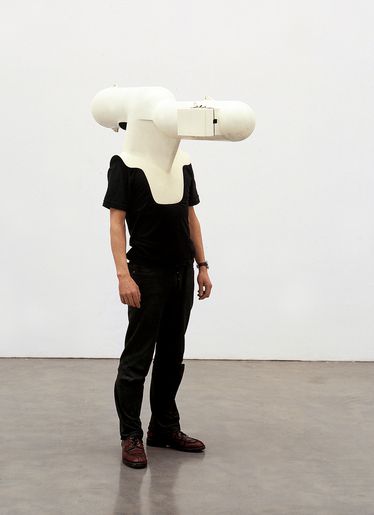
TV-Helm (Tragbares Wohnzimmer)
Walter Pichler
TV-Helm (Tragbares Wohnzimmer), 1967
Sculpture Polyester, varnished white, integrated TV-monitor with TV connection 59 x 120 x 43 cm
GF0001972.00.0-1998
Artwork text
Walter Pichler is one of the most important sculptors of the second half of the twentieth century. Within his oeuvre, the body of works produced between 1966 and 1969 titled Prototypen (Prototypes) occupy a special position. The groundbreaking experimental designs from this time combine architecture, design, and sculpture, and they have both visionary and skeptical tendencies. In Prototypen, which also includes TV-Helm (Tragbares Wohnzimmer) (TV Helmet [Portable Living Room]), Pichler references the aesthetic of space travel and the automobile and military industry, using modernist materials such as plastic, aluminum, and pneumatic elements. TV-Helm, which Pichler also calls Tragbares Wohnzimmer can be understood as a body application, a physical and technological extension of the human head, and a media isolation cell. Photographs showing Pichler putting on or having the TV helmet show how the respective person is simultaneously completely shut off from the outside world and focused on the television program currently playing on the screen integrated into the helmet’s front section. Decades before the invention of virtual reality headsets, Pichler’s claustrophobic technospace anticipates the extension of human modes of perception through media technologies and also formulates a critique of the isolation and appropriation of the human being in the age of TV and media consumption. (Jürgen Tabor)