Ernst Caramelle
Ernst Caramelle was born in Hall in Tirol, Austria, in 1952. From 1970 to 1976, he studied at the University (then College) of Applied Arts in Vienna, under Oswald Oberhuber, among others. In 1974, he was a research fellow at the Massachusetts Institute of Technology in the United States. From 1981 to 1983, he taught at the Städelschule in Frankfurt am Main, and from 1986 to 1990 at the University of Applied Arts Vienna. Beginning in 1994, he served as a professor at the Karlsruhe Academy of Fine Arts, and from 2012 to 2018 as its rector.
Ernst Caramelle participated in numerous international group exhibitions, including Documenta IX in Kassel in 1992. Solo exhibitions dedicated to the artist were held, among others, at the Kunsthalle Basel (1982), the Kunsthalle Bern (1986), the Musée Départemental de Rochechouart (1989), the Museum Haus Lange in Krefeld, the Nationalgalerie in Berlin (both 1990), the Vienna Secession (1990), the Portikus in Frankfurt am Main (1990), the BAWAG Foundation in Vienna (2002), the Museu Serralves in Porto (2005), the Badischer Kunstverein in Karlsruhe (2006), the Galerie im Taxispalais in Innsbruck (2008), the Wexner Center for the Arts in Columbus (2012), the Bonnefantenmuseum in Maastricht (2016), and the mumok – Museum of Modern Art, Ludwig Foundation, Vienna. 2018, the ACF-Austrian Cultural Forum, New York, USA (2025).
In 2001, he was awarded the Tyrolean State Prize for Art, and in 2022, he received the Klocker Foundation’s Grand Art Prize. Ernst Caramelle lives and works in Frankfurt am Main, Germany, and New York, USA.
“Ideas. Ernst Caramelle” has been displayed above a storefront in downtown Vienna since an exhibition held as part of “Art in Public Spaces” in 1988. It is an idea, a pure product of the imagination, because no actual storefront for ideas exists. The imaginary installation reflects Caramelle’s conceptual approach, in which the idea is regarded as equal to the physical artwork—whether realized or not. On the occasion of the “4th International Painting Weeks” in Graz in 1974, the artist began working with video at an early stage. In his characteristic ironic and critical manner, he staged a series of video performances and produced a series of photographs titled “Video Landscapes.” That same year, the artist deepened his exploration of what were then new media and their influence on our perception of reality as a “Research Fellow” at the Center for Advanced Visual Studies at MIT in Cambridge (USA). There he created his installation “Video Ping-Pong” (1974), an icon of early video art that examines reality and media reality and is part of the Generali Foundation Collection.
Throughout his artistic practice, Caramelle consistently focuses on questioning reality. The difficulty of answering the question “What is reality?” is reflected in his works through a shift from unambiguity toward ambiguity. In 1979, he published “Forty Found Fakes” in New York, a collection of newspaper clippings that he presented as reproductions of works by renowned artists. The artist explores the boundaries between truth and deception, reality and illusion, in order to challenge our perception of reality. For Caramelle, the deliberate selection of media is essential, as he uses them in conscious reflection on their varying conditions. Drawing, photography, video, as well as the production of printed materials, exhibition catalogs, and artist books are all equally valued works for the artist. Over the years, Caramelle has developed a broad spectrum of subtle variations on his own designs, which he repeatedly revisits, copies, and yet slightly alters, so that we can see and think more clearly about what appears to be the same.
Since the 1980s, the artist has also devoted himself to mural painting, for example, on the occasion of his participation in Documenta IX in Kassel in 1992. Another group of works consists of his “Gesso Pieces”: works on paper that he creates using watercolor, ink, or acrylic paint on supports prepared with a chalk base (gesso), some of which he subsequently washes away. Caramelle himself refers to these as “quasi-paintings” and, through these works, challenges our perception of the original and spatial illusion. (Doris Leutgeb)
Books of artists
Ernst Caramelle. "Ich mache jetzt überhaupt nur Sachen, welche gut photographiert werden können, leicht zu handhaben sind, aber auch gewissen Wert auszustrahlen vermögen..." Ed. Galerie nächst St. Stephan. Text by Garcia, Angel Gonzalez. Vienna, 1979.

Ernst Caramelle. Ed. Secession. Vienna, 1993.

Ernst Caramelle. Quasi die Physiognomie im Augenblick der Wahrnehmung. Ed. Portikus. Frankfurt on the Main, 1993.

Ernst Caramelle. Ed. Martin Köttering for Städtische Galerie. Text by Caramelle, Ernst. Nordhorn, 1998.

Ernst Caramelle. Ed. Kunsthalle Bern. Text by Loock, Ulrich. Bern, 1986.

Ernst Caramelle. Zwei Arbeiten. Fünf Fälschungen. Ed. Galerie Krinzinger. Innsbruck, 1977.

Ernst Caramelle. Fourty found fakes 1976-1978. Text by Caramelle, Ernst. New York: Thomas Way & Company, 1979.

Ernst Caramelle. Ed. Bawag Foundation. Vienna, 2001.

Ernst Caramelle. Ed. Musee departemental. Text by Tosatto, Guy. Rochechouart, 1989.

Ernst Caramelle. Ed. Hubert Winter for Galerie Winter. Vienna, 1984.

Ernst Caramelle [Version 1]. Ed. Wexner Center for the Arts. Text by Bedford, Christopher. Columbus, 2012.
Ernst Caramelle. Facsimile. Ed. De Zaak. Groningen, 1988.

Ernst Caramelle. BRDO 1976. Ed. Ursula Krinzinger. Innsbruck, 1976.

Ernst Caramelle. Gagarin Volume 4 #2. Ed. GAGA. Waasmunster, 2004.

Ernst Caramelle. Various artists. Ed. Franz Graf, Fritz Grohs. Oslo, 1987.

Ernst Caramelle. Een keuze. A choice. Ed. Stichting Kunstbeurs. Amsterdam, 1987.

Ernst Caramelle. The METRONOME, or Backwards Translation: (No. 4 - 5 - 6). Ed. Clementine Deliss. London: Metronome Press, 1999.

Ernst Caramelle. Zweitschrift 8 m.u.(z.i.e.k.) ². Ed. Uta Brandes-Erlhoff, Michael Erlhoff, Paul Komor, Harald Welzer. Hannover: Zweitschrift, 1981.

Ernst Caramelle. Conzert für Klavier und Gespräch. 1974.

Ernst Caramelle. Josef Troma schläft heute (Marginalien). Ed. Karl Riha. Frankfurt on the Main: Patio Verlag, 1978.

Ernst Caramelle. 2 pieces of each work / 2 works of each piece. Ed. Galeria Buades. Madrid, 1979.

Ernst Caramelle. Blätter 1973 - 1978. [2]. Ed. Peter Weiermair for Kunstverein. Texts by Ammann, Jean Christophe; Bayrle, Thomas; Zacharopoulos, Denys. Frankfurt on the Main, 1981.

Ernst Caramelle. Och könn jetzt not roden. Hannover: Zweitschrift, 1981.

Ernst Caramelle. Detail einer Totalansicht. Berlin: Rainer Verlag, 1984.

Ernst Caramelle. Marginalien. Ed. Petersen Galerie. Berlin, 1984.

Ernst Caramelle. (publication). Ed. Jack Tilton Gallery. New York, 1986.

Ernst Caramelle. after image. Ed. Museum Schloss Hardenberg. Velbert, 1989.

Ernst Caramelle. Grandeur nature. Life-size. Ed. Musee d'art moderne. Paris, 1990.

Ernst Caramelle. Ed. Museum Haus Lange. Krefeld, 1990.

Ernst Caramelle. Panorama der Retrospektiven. Berlin: Rainer Verlag, 1990.

Ernst Caramelle. Die Kataloge vom Caramelle sind keine Kataloge, sondern Publikationen von Abbildungen einer Ausstellung, die entweder schon vorbei oder noch nicht zu sehen ist. Ed. Galerie Ferdinand Maier. Kitzbühel, 1998.

Ernst Caramelle. Freibord Nr. 125 (3/2003). Ed. Jaschke, Gerhard. Wien: Edition Freibord, 2003.

Ernst Caramelle at Lawrence Markey 1993 - 2009. Ed. Lawrence Markey Gallery. San Antonio, 2009.

Ernst Caramelle. Bulletin art aujourd'hui. Janvier No 1 [MEDIA INTERVENTION]. Ed. Camille von Scholz for Galerie Camomille. Brüssel, 1982.

Ernst Caramelle. Bücher. Drucksache zu ermäßigter Gebühr. Ed. Neues Museum Weserburg. Text by Schraenen, Guy. Bremen, 1993.

Ernst Caramelle. Grafschafter Nachrichten.12. Dezember 1998. Nordhorn, 1998.

Ernst Caramelle. Der Standard. 22. April 1999. Ed. Museum in Progress. Vienna, 1999.

Ernst Caramelle. Lobster (April/Mai). Ed. Jochen Meurers for Lobby für Wohnsitzlose und Arme. Frankfurt on the Main, 2000.

Ernst Caramelle. Le Tableau Contemporain. Ed. Musee d'art moderne et contemporain. Strasbourg, 2004.

Ernst Caramelle. Ernst Caramelle. 2025. Ed. Caramelle, Ernst. Köln: Verlag der Buchhandlung Walther und Franz König, 2025.
Ernst Caramelle. two dots one line. Ed. Keppler-Schlesinger, Susanne; Buhmann, Stephanie for Austrian Cultural Forum New York. Texts by Keppler-Schlesinger, Susanne; Buhmann, Stephanie. Berlin: The Green Box, 2025.
Ernst Caramelle. Actual size. New York: Peter Freeman, Inc., 2023.
Ernst Caramelle. Illusion and revelation. Ed. Bonnefantenmuseum. Text by van den Bosch, Paula. Maastricht, 2017.
Artworks
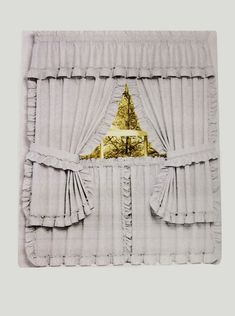
Anonyme Bilder, 1986-1991
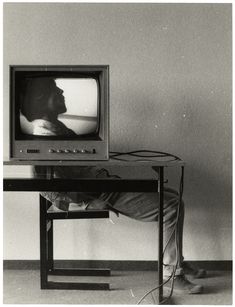
Aus der Serie "Video-Landschaften", 1974
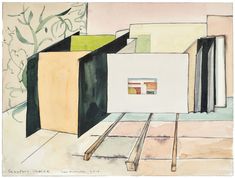
Curator's Choice, 2010
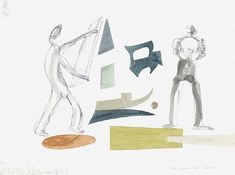
Drawing and Construction, 2010
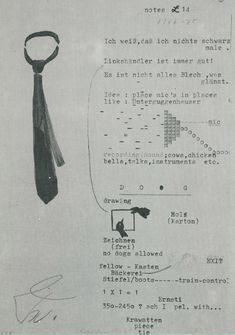
Einladungskarten, 1977-2026
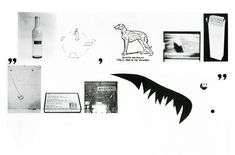
Kunstplakate, 1975-2013
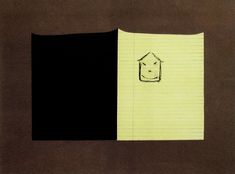
Limitierte Editionen, 1982-2001
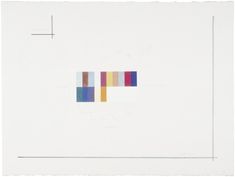
Ohne Titel, 1984
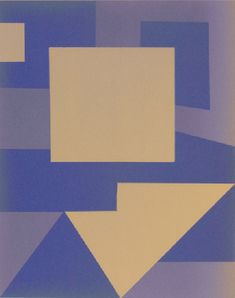
Ohne Titel, 2001-2003
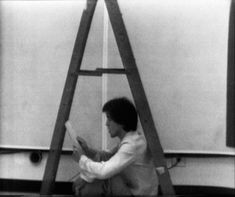
Sketch-Tape, 1975
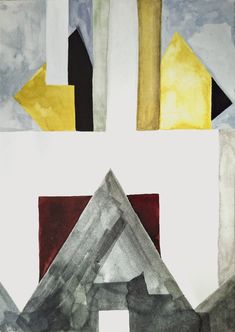
Staatliche Akademie der Bildenden Künste Karlsruhe, 2015
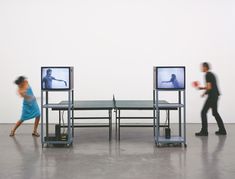
Video-Ping-Pong, 1974